


Navigating the New York Housing Maze: A Guide for International Students in 2026
Navigating the NYC rental market is a challenge for international students. This guide explores the best neighborhoods near top universities, curre…




Finding a home in New York City is often the first and most difficult lesson an international student learns. While the dream involves brownstones and Central Park views, the reality often hits with a mountain of paperwork, high costs, and a rental market that moves at a breakneck pace. For a student arriving from London, Mumbai, or Seoul, the traditional “New York way” of renting can feel like a system designed to keep them out.

However, the landscape of New York housing has shifted. Instead of the narrow choice between a cramped dorm room and a predatory lease, there is now a sophisticated ecosystem of flexible housing designed specifically for the global academic community. This guide provides a comprehensive roadmap for international students to secure the best accommodations in New York, focusing on the latest 2026 data, neighborhood safety, and the emergence of flexible living solutions that bypass the city’s notorious red tape.
- The 2026 Rental Reality: Budgeting for the Big Apple
In 2026, the NYC rental market has reached a new level of complexity. For Manhattan studios, international students should expect starting prices around $3,500, while premium units in luxury doorman buildings or highly sought-after neighborhoods can easily reach $6,500 per month. According to the latest data from the NYC Rent Guidelines Board, market-rate adjustments continue to follow the city’s shifting economic landscape, making early research essential.

Beyond the rent, a successful move requires a granular understanding of the total cost of living. Here is what an international student should expect to spend monthly in 2026:
| Expense Category | Estimated Monthly Cost (USD) | 2026 Market Notes |
| Rent (Studio/1BR) | $3,500 – $6,500 | Manhattan prices; high-rises are the most expensive. |
| Utilities & Energy | $175 – $300 | Costs reflect the 2026 shift toward green-energy surcharges. |
| High-Speed Internet | $80 – $120 | Necessary for “phygital” (hybrid) learning models. |
| Food & Groceries | $600 – $800 | Cooking at home remains the best way to save. |
| MTA Transit Pass | $132 | Covers unlimited subway and bus rides. |
| Personal & Social | $300 – $500 | NYC dining and entertainment costs. |
Financial Strategy: Many students are now prioritizing all-inclusive rentals. Managed housing providers often bundle utilities and Wi-Fi, which protects students from the seasonal energy price spikes that often surprise international renters in the winter.
- Best Areas for Students to Live (By University)
Location is everything. In New York, your neighborhood is your community, your commute, and your lifestyle. Here are the top locations categorized by proximity to major academic institutions:
Columbia University & Barnard College
-
- Morningside Heights: The quintessential “college town” within Manhattan. It is safe, academic, and dominated by student-friendly cafes and bookstores.
- Upper West Side: Ideal for graduate students who prefer a quieter, more residential atmosphere. It is one of the most prestigious areas in the city and offers unparalleled access to Central Park.
New York University (NYU) & The New School
-
- Greenwich Village: The heart of the NYU campus. While expensive, it is the epicenter of New York culture.
- East Village: Offers a more vibrant nightlife and “edgy” feel, popular with arts and film students.
- Downtown Brooklyn: A massive trend in 2026. With the R, N, and Q trains, students can get to the Village in under 15 minutes, often finding more modern furnished apartments in New York for their budget compared to Manhattan’s aging walk-ups.
Fordham University (Lincoln Center) & Juilliard
-
- Hell’s Kitchen: Known for its incredible food scene (9th Avenue) and its proximity to the theater district. It is a high-energy area that is just a short walk from the Lincoln Center campus.
- Lincoln Square: A sophisticated pocket of the Upper West Side that is perfect for those who want a 5-minute walk to class.
- The Safest Neighborhoods in NYC for Students
Safety is the top priority for international families. According to 2026 safety data and residential reports on StreetEasy, the following areas stand out for their low crime rates and high quality of life:
-
- Battery Park City: This is a planned residential enclave at the southern tip of Manhattan. It is almost entirely traffic-free and features 24/7 security patrols, making it consistently ranked as one of the safest neighborhoods in NYC.
- Roosevelt Island: A hidden gem in the East River. It is a “micro-community” that feels worlds away from the city’s chaos. It is exceptionally safe and connected to Manhattan via a scenic tramway and the F train.
- The Upper West Side: Specifically the areas between 72nd and 96th Streets. The high density of families and professional doorman buildings creates a secure environment for students walking home late.
- Brooklyn Heights: Known for its historic charm and quiet, tree-lined streets, this is the safest pocket of Brooklyn and is just one subway stop from Manhattan.
- The “International Challenge”: Documents and Red Tape
One of the most shocking realizations for international students is the “40x Rent Rule.” Most New York landlords require tenants to prove an annual income of at least 40 times the monthly rent. If you don’t have a U.S. salary, they require a guarantor who earns 80 times the rent and lives in the tri-state area.
Traditional Requirements vs. The Modern Way
| Standard Rental Documents | The Studentground Approach |
| U.S. Social Security Number | Not required |
| U.S. Credit History (2+ years) | Not required |
| Local Tri-State Guarantor | Not required |
| Annual Income Proof (40x Rent) | University Enrollment/I-20 Form |
| Broker Fee (15% of annual rent) | Zero Broker Fees |
This is why the student housing program in New York — Studentground has become the gold standard for 2026. It recognizes that international students have different financial profiles and removes the barriers that traditionally make NYC rentals inaccessible to foreigners.
- All Possible Housing Options for Students
-
- University Dormitories: While convenient, dorms are often the most expensive option per square foot. In 2026, many universities are facing housing shortages, meaning upperclassmen and graduate students are frequently pushed into the private market regardless of their preference.
- Purpose-Built Student Housing (PBSH): Providers like Casita or AmberStudent offer buildings dedicated solely to students. These are social environments but can feel restrictive, often lacking the “authentic” New York living experience.
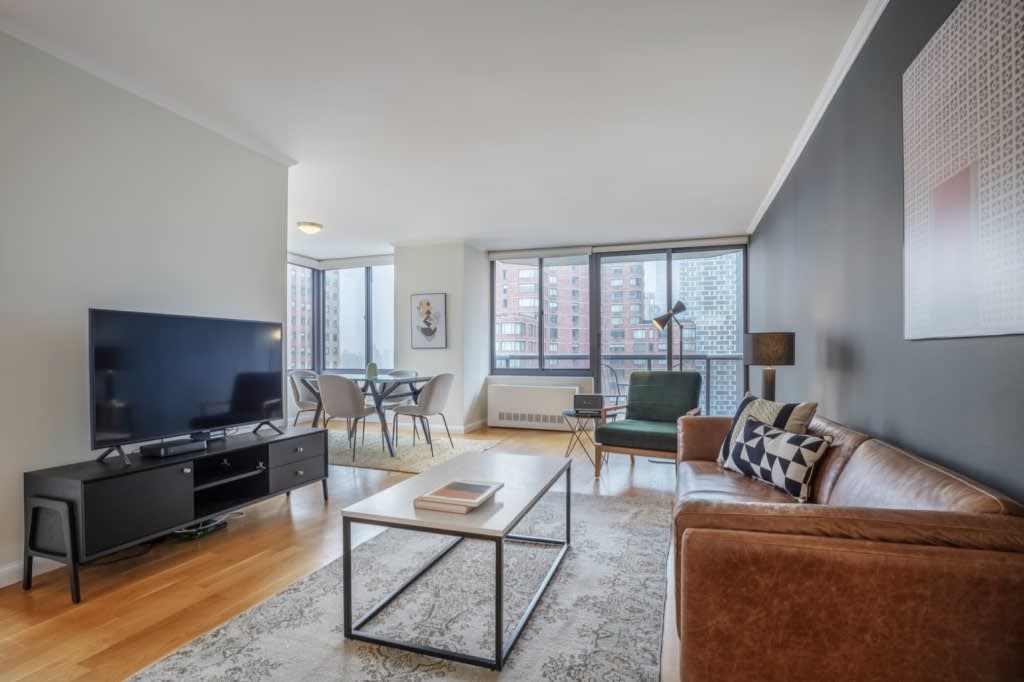
- Private Furnished Rentals (The Professional Choice): For those who want a high-end, seamless transition, managed furnished apartments in New York are the top choice. This model solves the biggest pain point for international arrivals: the ability to move into a designer home without the need to buy, assemble, or eventually sell furniture.
- Why “Studentground” is the Best Option in 2026
The “Flexible Living” model offered by Blueground’s Studentground program excels because it treats housing as a service rather than a legal hurdle.
-
- Turnkey Entry: You walk in with your suitcase and your laptop. The kitchen is stocked, the bed is made, and the Wi-Fi is already active.
- Maintenance Support: In 2026, you shouldn’t have to chase a distant “super.” If a faucet leaks, you use an app to request a fix.
- Security: Most managed apartments are in doorman buildings or high-security developments, providing peace of mind for families back home.
- Financial Sanity: By eliminating the “Broker Fee” (which can be $6,000+ on a typical Manhattan apartment) and the cost of furnishing a home from scratch, Studentground is often more cost-effective over a 9 to 12 month academic year.
- Additional Tips to Find the Best Housing
-
- The “One-Stop” Rule: Look for apartments exactly one subway stop outside of Manhattan (e.g., Long Island City or Downtown Brooklyn). You often get a brand-new building with a gym and rooftop for the same price as an old walk-up in Manhattan.
- Beware of Scams: Never wire money via Zelle or Western Union to a landlord you haven’t verified. Stick to reputable, institutional platforms.
- Check the Commute during Rush Hour: Use Google Maps to check the transit time at 8:30 AM on a Tuesday, not on a Sunday morning when the subway runs differently.
- Look for “L-Shaped” Studios: In 2026, these are highly prized by students because the alcove allows you to separate your sleeping area from your study area, making a studio feel like a one-bedroom.
Conclusion
New York City is arguably the best place in the world to be a student. While the housing market presents unique challenges, the rise of managed, flexible housing has leveled the playing field. By choosing the safest neighborhoods in NYC and leveraging modern solutions like the student housing program in New York — Studentground, international students can skip the stress of guarantor negotiations and go straight to enjoying the greatest city on earth.

Related Stories


