


Your essential guide on moving to another state
Keep these things in mind as you relocate to a new city.




Key Takeaways
- Budget $2,000–$5,000 for a full-service move or $500–$2,000 to do it yourself, and get a few quotes before you commit either way.
- Give yourself six to eight weeks to research, budget, and pack before moving day.
- Renting first — even for a month or two — lets you test a neighborhood before signing a longer lease.
- Don’t forget the administrative side: driver’s license, vehicle registration, address changes, and voter registration all need updating.
- A fully furnished apartment (like Blueground) skips most of the packing, utility setup, and furniture-buying most moves require.
Maybe you’ve already decided to relocate. Maybe you’re considering it. Whatever the case, it’s a big decision that requires a lot of planning and thought. In this guide on moving to another state, we’ll cover everything from jobs and finances to schools, transportation, and so much more.

Choosing the right state to move to
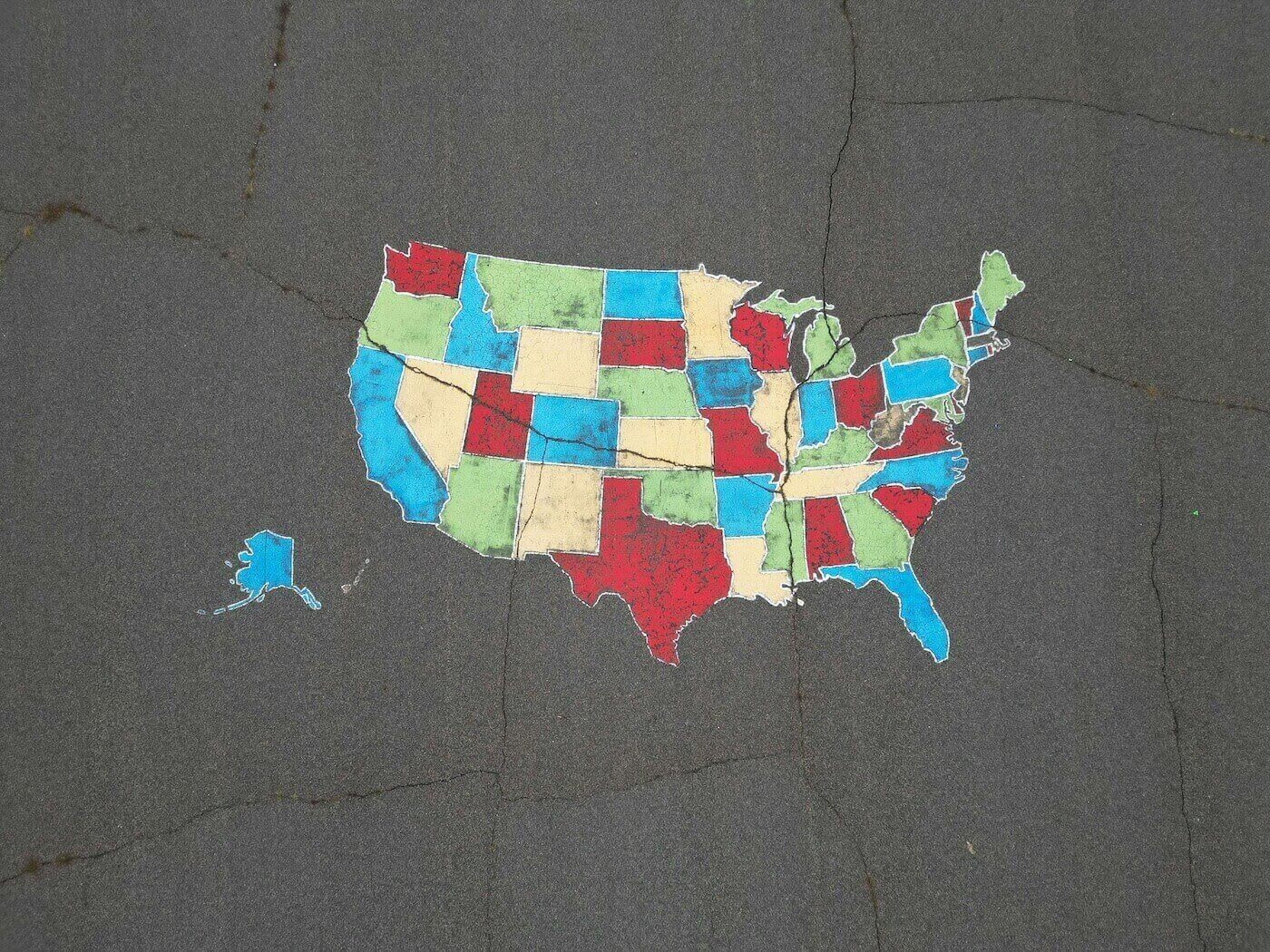
So…where do you want to live? With 50 states to consider, maybe a better question is: Where don’t you want to live? Once you cross several states off your list, it’s time to dig deeper. Sure, you may know the reputation some states have, but those aren’t always 100% accurate. Our biggest piece of advice? Research, research, research.
Be sure to utilize online resources. For example, read through state rankings provided by reputable online magazines. Each of these rankings has distinct criteria, so take that into account as well. Another way to determine your next destination is to ask others. See if any of your friends have firsthand experience living elsewhere. Their insider knowledge is invaluable.
Last but not least, some states and cities even provide relocation incentives. What does that mean exactly? They pay you to move there! If you aren’t dead set on a specific state or town, a cash incentive can help make the decision easier. At the end of the day, however you make your decision, the process should be more sophisticated than “eeny, meeny, miny, moe.”
How much does it cost to move to another state?

Want to see how far (or short) your dollar will go in another city? Sites like NerdWallet, Bankrate, and Forbes provide cost of living analysis. Just plug in a few details and you can better understand if you’re getting a bang for your buck or not. This is especially important to know if you’re comparing two or three places.
Remember to budget for moving expenses. That could include a moving truck and boxes as well as cleaning services for your current home, storage services, and more. Depending on the distance and how much you own, a full-service move can run from a couple thousand dollars to well over five thousand, while doing it yourself with a rental truck typically costs a few hundred to a couple thousand. A handful of quotes upfront will tell you which end of that range you’re looking at.On the flip side, you can earn a few extra bucks by decluttering before moving and selling some of your possessions. When you move into a furnished apartment with Blueground, you get access to exclusive guest perks. Some of those include discounts on moving and storage services.
Finding a job before you move

Moving for work is one of the main reasons people start living in a new city. Do you already have a gig lined up or are you searching for one? Either way, you’ll need to get a sense of the opportunities in your area of employment. To do this, look at online job sites, like Indeed, Monster, and LinkedIn. But don’t just look at current openings. You’ll get a better idea of the big picture by looking at jobs from the past year that have been filled.
If you’re able to work remotely, the possibilities are endless. You can move practically anywhere. Just be sure to find a home where you can work comfortably. For example, Blueground’s move-in-ready apartments are laid out by interior designers and have excellent work-from-home setups.
Renting vs. buying: which makes sense for you?

To rent or to buy? That’s the question. Whether you stay in a house or apartment, owning vs. renting is a decision you’ll have to make. One of the biggest hangups with owning is that you’ll be responsible for all of your home’s maintenance and repairs. That can either mean spending lots of money on repair services or spending lots of time fixing the issues yourself. Renting is advantageous in that the landlord is in charge of your home’s upkeep. Additionally, places like Blueground offer flexible lease terms, giving you the opportunity to stay for a month, a year, or longer. This can be a great option for those who want to try out a neighborhood for a few months before fully committing to a long-term contract.
Signing a year-long lease on a neighborhood you’ve never actually lived in is a gamble and is an easy way to end up somewhere that doesn’t fit once the boxes are unpacked. Booking a month or two in a furnished apartment first gives you a home base to actually test the neighborhood, the commute, the noise level, and how far the closest grocery store really is before signing anything longer. It also takes the pressure off finding your forever apartment before you’ve even seen the city in person.
Location, location, location also comes into play with your real estate choice. Every neighborhood has a different personality. Some are historic. Some are close-knit. Others are trendy and energetic. What kind of vibe appeals to you? Look at different neighborhood descriptions and maps online to understand what’s in that area or easily accessible.
Researching schools before you move

No matter if you have kids or you’re a university student looking for modern, off-campus housing, the nearby schools are important. Be sure to find out what school districts any potential home would be in and research the statistics about the district’s schools. That might mean test scores, teacher-to-student ratios, average money spent per student, extracurricular activities, and more. Your children’s education is a huge factor to weigh when moving to another state.
Setting up healthcare in a new state

Being close to a hospital can be life-saving, so it’s important to know how close your new home will be to the nearest one. Some states or cities could also feature special medical facilities you may need access to as well.
Before or right after you move, remember to secure your new healthcare providers: doctors, dentists, pediatricians, and any other specialists you require. Many healthcare providers don’t take on new clients, so you should reach out as soon as you decide to make the move, particularly if you have specialized medical needs. This will help you land new doctors, dentists, etc. quickly after you move to a new state.
Packing and building a moving timeline
Six to eight weeks. That’s roughly how much lead time you want once the big decisions are settled, and it’s when packing should start creeping onto your to-do list. Sort through closets, storage bins, and that one drawer everyone has, then figure out what’s actually worth the box space. Selling or donating the rest pays off twice: once in a lighter moving bill, and again when you’re not paying to store things you don’t use.
A few weeks out, start boxing up anything you don’t touch daily. Label boxes by room instead of just contents, and keep a running list of what went where. You’ll want it the morning you’re digging through three boxes looking for the coffee maker. One thing that should never go in a box: your important documents. Passports, birth certificates, medical records, and anything else that’s a hassle to replace should travel with you, not with your belongings. For a fuller step-by-step rundown, this moving checklist covers everything else worth planning for.
A fully furnished apartment skips most of this. There’s no unpacking boxes of kitchenware or waiting around for a cable installer. With Blueground, the furniture, the Wi-Fi, and the welcome gift are already there when you walk in.
The legal & administrative side of moving to another state

Moving to another state is really exciting, but there’s also some adulting that needs to be done. While it’s boring and tedious to take care of this stuff, it’s also really important. Some of the actions you’ll need to take are to:
- Update your driver’s license
- Register your vehicles
- File a change of address with the United States Postal Service
- Set up or transfer utilities like electricity, gas, water, and internet
- Let your employer and insurance companies know
- Transfer your medical records to new healthcare providers
- If you have children, transfer school records and register them in new schools
- Update your address with banks, credit card companies, the IRS, and state tax authorities
- Register to vote in your new state
- If you hold any professional licenses, apply for licensure in the new state
If you’re moving into a fully furnished rental like Blueground, you can cross the utilities step off your list entirely. It’s usually already switched on and included before you arrive.
Adjusting to local culture

America is referred to as a “melting pot” for a reason. There are all types of people all over the country! Plus, there are regional differences as well. When you’re thinking about how to move to another state, the first things that might pop into your head are probably physical or logistical changes. But spend some time considering cultural changes, too. After all, your new home state may feature more or less certain languages, religions, sports, foods, arts, and holidays. It can be shocking if you aren’t ready for it. However, part of the fun of moving is embracing these new customs and starting new traditions.
Although you may feel homesick for your previous residence, there are ways to adjust more easily. Bring some of your unique experiences along! Cook a meal that reminds you of your past home. Hang a work of art that reminds you of the last state or city you lived in. Wear that sports jersey you love. A little nostalgia never hurt anyone.
Building a new circle takes effort too, especially if you’re moving without coworkers, family, or old friends already there. Apps and local Facebook groups built around your neighborhood or hobbies are an easy way to find people with something in common. If you work from home, a nearby coworking space can double as a way to meet people during the day. Say yes more than you normally would to a coworker’s invite, a neighbor’s suggestion, or a class at the gym down the street.
Getting around your new city

Look into the public transportation options in your new state and city. Is there a good subway system? Do the buses run on time? Prepare for your move by doing a little research on Reddit or finding online reviews, so you get honest advice from real people. What you discover may impact whether you need to bring a bike, get a car, or opt for ride-share services.
Another couple of things to look at? Your best routes and the traffic you may encounter. It may only be a short drive from your apartment to your office, but bumper-to-bumper traffic can throw a wrench into your commute. Get a sense of how good or bad traffic can be. Armed with this information, you can come up with alternate routes or even completely change your transportation plans.
What to expect from local weather

It’s amazing how much the weather impacts our everyday lives. That’s why it’s crucial to know what to expect weather-wise in your new location. However, that involves more than just checking out the monthly high and low temperatures.
Are there seasonal patterns? If so, that’s going to influence what you pack or need to purchase. Moving to a beachside apartment in Miami? You’d better have sunscreen, sandals, and tank tops. Staying in a constantly drenched home in Seattle? An umbrella, raincoat, and rain boots are essential. Don’t forget, the weather also influences how you maintain vehicles, how often you can enjoy a balcony or swimming pool, and so much more.
Going for a big change in scenery? A wide swing from a southern state to a northern one or a coastal city to an inland suburb makes a huge difference. It’s one thing to know about the scorching summers in Texas or brutal winters in New York, but it’s way different actually experiencing them. Do your best to prepare!
Checking safety before you move

What are the crime statistics in the state? In the city? Are the parks well-lit? Is there a high police presence? Assessing crime rates can possibly encourage or discourage you from relocating to certain states. Do some research online or find local groups who may be knowledgeable about these issues. It’s always a good idea to take precautions in unfamiliar places. After you’ve settled in somewhere, you can slowly start exploring more and more of your new neighborhood and city.
Moving with family and pets

Before moving to another state, make a list of what your family needs. If possible, also try to rank your list from most important to least. For instance, think about the location.
- Do you need to live close to a specific hospital for medical treatments?
- Is it necessary to live in an apartment building with an elevator so an elderly family member can get around easier?
- Should you live in between where you and your partner work, or closer to one office than another?
There are even more things to consider if you have children. You may need to research how common three-bedroom homes are in the area you want to live in. Looking into the local schools is another major thing to do. And don’t forget about your pets! Google to see if there are dog parks and highly rated vets nearby. Companies like Blueground offer thousands of pet-friendly furnished apartments in the United States where you can live for a month, a year, or longer.
Ready to make your move to a new state?

Moving to another state is exciting and a little scary at once, and there’s a lot to think through before you land in a new one. When it’s time to find a place, Blueground makes the search easy. As the largest curated network of furnished rentals in the world, with move-in-ready apartments in more than 1,000 cities, Blueground already has your next home set up with furniture, a stocked kitchen, linens, and Wi-Fi before you walk in. Leases start at 30 days and stretch to month-to-month or multi-year terms, so you’re not locked into anything before you actually know the neighborhood, and the savings add up if you’re staying a year or longer. Apartments come in every shape, size, and location, so there’s likely one that fits wherever you land.
Frequently asked questions
How much does it cost to move to another state?
A full-service move typically runs $2,000–$5,000 depending on distance and how much you own; a DIY move with a rental truck usually costs $500–$2,000. Get a few quotes before you commit to either.
How far in advance should I start packing?
Start six to eight weeks out. Sort and declutter first, then begin boxing up anything you don’t use daily a few weeks before moving day.
What paperwork do I need to update when I move to another state?
At minimum: your driver’s license, vehicle registration, address with the USPS and your bank, employer and insurance records, and your voter registration.
Do I need to find new healthcare providers before I move?
Start early. Many providers aren’t accepting new patients, so reach out as soon as you decide to make the move, especially if you have specialized medical needs.

Related Stories


