


Living in Nonhyeon-dong, Seoul: A guide for expats and monthly renters
Located in Gangnam-gu, Nonhyeon-dong offers a balance between residential comfort, business convenience, and access to Seoul’s lifestyle hubs. Whil…

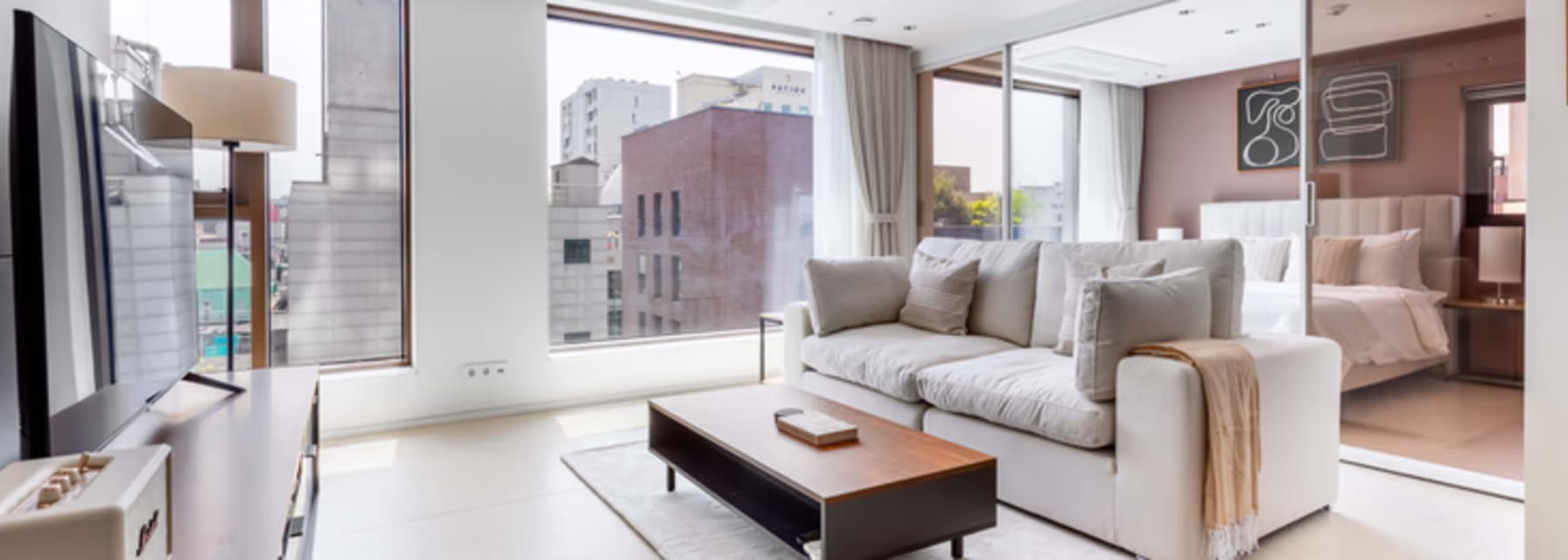


Located in Gangnam-gu, Nonhyeon-dong offers a balance between residential comfort, business convenience, and access to Seoul’s lifestyle hubs. While it is close to well-known areas such as Gangnam, Sinsa, and Apgujeong, Nonhyeon-dong provides a slightly quieter residential environment with easy connections to offices, restaurants, cafés, and everyday amenities.
Before renting in Nonhyeon-dong, expats should consider factors such as rental budget, commute requirements, apartment type, contract flexibility, and whether a furnished home is needed. This guide explains what it is like to live in Nonhyeon-dong, how it compares with nearby Seoul neighbourhoods, and what international renters should know before choosing a home.
Key takeaways
- Nonhyeon-dong offers a more residential feel than the Gangnam Station area while remaining close to Gangnam Station, Sinsa and Apgujeong.
- The neighbourhood is suitable for professionals who need access to southern Seoul business areas and convenient transport connections.
- Housing options range from officetels and apartments to furnished apartments designed for flexible stays.
- Renters should compare deposits, monthly costs, included amenities, and registration requirements before signing.
Location and transport: Getting around Seoul from Nonhyeon-dong
One of the biggest advantages of living in Nonhyeon-dong is its connection to Seoul’s major business and lifestyle districts. The neighbourhood sits in southern Seoul’s Gangnam area, allowing residents to reach offices, shopping areas, and entertainment destinations without long daily commutes. For expats and monthly renters, this accessibility can be especially valuable when arriving in Seoul and needing a home base that connects easily with different parts of the city.
Nonhyeon-dong is served by several subway stations, including Nonhyeon Station (Line 7 and Shinbundang Line), Sinnonhyeon Station (Line 9 and Shinbundang Line), and nearby Eonju Station (Line 9). These connections make it convenient for residents who work in Gangnam, Yeouido, Jongno, or other major business districts.
| Destination | Approximate travel time | Transport option |
|---|---|---|
| Gangnam Station | Around 5–10 minutes | Subway, bus, or walking depending on location |
| Sinsa-dong / Garosu-gil | Around 10 minutes | Subway or local bus |
| COEX / Samseong area | Around 20–30 minutes | Subway connections via Gangnam and Line transfers |
| Yeouido business district | Around 30–40 minutes | Line 9 access from Sinnonhyeon Station |
| Seoul Station | Around 35–45 minutes | Subway transfers through central Seoul |
| Incheon International Airport | Around 70–90 minutes | Airport bus or subway transfer options |
Beyond commuting, Nonhyeon-dong’s location makes it easy to explore neighbouring districts. Residents can reach the shopping and dining areas of Sinsa, Apgujeong, and Cheongdam, while Gangnam Station provides access to major department stores, restaurants, and entertainment venues. This combination of accessibility and neighbourhood convenience is one reason why Nonhyeon-dong appeals to professionals looking for a central Seoul home.
For international renters, transport convenience can also reduce the pressure of choosing a home close to every destination. A well-connected neighbourhood like Nonhyeon-dong allows residents to prioritise other factors, such as apartment size, building facilities, and rental flexibility, while still maintaining easy access across Seoul.
What types of housing are available in Nonhyeon-dong?
For expats and monthly renters, understanding the types of housing available in Nonhyeon-dong is an important step before choosing a home. Like many central Seoul neighbourhoods, Nonhyeon-dong offers a mix of traditional apartments, officetels, studio units, and furnished residences, each suited to different lifestyles, budgets, and rental periods.
International renters often have different requirements from local long-term tenants. While some residents may prefer a traditional Korean lease with more space and long-term stability, others may prioritise flexibility, faster move-in, and a home that already includes furniture and household essentials.
| Housing type | Suitable for | Main considerations |
|---|---|---|
| Apartment | Families, couples, and long-term residents who need more space | Usually offers better residential facilities but may require larger deposits and longer commitments. |
| Officetel | Professionals, singles, and shorter-term renters | Often located near business areas and transport hubs, but units may have limited living space. |
| Studio apartment | Solo renters or residents prioritising affordability | More compact layouts suitable for shorter stays or individuals. |
| Furnished apartment | Expats, corporate renters, and people relocating internationally | Provides furniture and household essentials, reducing the need to arrange setup after arrival. |
| Serviced residence | Business travellers or residents needing additional support | May include services such as cleaning, reception, or flexible booking options. |
When comparing rental options in Nonhyeon-dong, renters should look beyond the apartment type itself. Factors such as proximity to subway stations, building age, included amenities, and contract flexibility can significantly affect the overall living experience.
For foreigners moving to Seoul, furnished apartments can be especially practical because they remove some of the common challenges of relocation. Instead of purchasing furniture, arranging appliances, or setting up a home from scratch, residents can move into a space that is already prepared for everyday living.
However, renters should confirm exactly what is included before signing an agreement. The term “furnished” may vary between providers, so it is important to check details such as Wi-Fi availability, kitchen equipment, bedding, laundry facilities, utilities, and maintenance support. A clear understanding of these inclusions helps international residents choose a home that matches both their lifestyle and length of stay.
Is Nonhyeon-dong a good area for foreigners?
For expats moving to Seoul, choosing a neighbourhood often depends on more than location alone. Factors such as language accessibility, daily convenience, transportation, housing flexibility, and access to international services can significantly affect how easily someone settles into a new city. Nonhyeon-dong is considered a practical option for foreigners who want to live near Gangnam while maintaining access to everyday residential facilities.
The neighbourhood benefits from its central location within Gangnam-gu, with restaurants, cafés, supermarkets, pharmacies, fitness centres, and transport connections available within walking distance in many areas. Its proximity to popular districts such as Sinsa, Apgujeong, and Gangnam also gives international residents access to a wider range of dining, shopping, and lifestyle options.
However, Nonhyeon-dong may not suit every type of expat. While it offers strong connectivity and convenience, it is a more urban neighbourhood compared with quieter residential areas in Seoul. Renters looking for large green spaces, a slower pace, or a strong international community may prefer other districts.

What should foreigners know before renting in Nonhyeon-dong?
Renting an apartment in Seoul can involve different processes compared with other countries, especially for foreigners who are unfamiliar with Korean rental systems. Before choosing a home in Nonhyeon-dong, international renters should understand key factors such as contract terms, required documents, deposits, included facilities, and move-in procedures.
For monthly renters, the most important step is confirming that the apartment matches both their lifestyle and practical requirements before signing an agreement. A lower rental price may not always represent better value if the apartment requires additional setup costs, lacks essential facilities, or does not support the renter’s expected stay period.
Renting before receiving a Residence Card (ARC)
Many foreigners begin searching for housing options before arriving in Seoul, especially for work relocation, study programmes, or corporate assignments. However, rental requirements can vary depending on the landlord, apartment provider, and housing type.
Before committing to a property, international renters should clarify:
- Whether a passport can be used to complete the booking process before receiving a Korean Residence Card (ARC).
- Whether additional documents, such as employment confirmation, visa information, or assignment letters, are required.
- Whether the rental provider allows documents to be submitted after arrival in Korea.
- Whether the rental agreement can support future residence registration requirements.
For renters moving from overseas, this step is particularly important because traditional Korean rental processes may involve more documentation and longer preparation compared with furnished monthly rentals designed for international residents.
Understanding Korean rental deposits and monthly costs
One of the biggest differences between renting in Korea and many other countries is the use of security deposits. Even monthly rentals commonly require a deposit, and the amount can vary depending on the property type, location, and contract arrangement.
When comparing apartments in Nonhyeon-dong, renters should consider the complete monthly housing cost, including:
| Cost factor | What renters should check |
|---|---|
| Monthly rent | Whether the advertised price matches the final payment amount |
| Security deposit | Required amount and refund conditions |
| Maintenance fees | Building management fees, shared facilities, and services |
| Utilities | Electricity, water, gas, and internet costs |
| Additional services | Cleaning, furniture, or relocation support if included |
For expats staying in Seoul for several months, a lower monthly rent may not always mean lower overall costs if the apartment requires furniture purchases, appliance setup, or a large upfront commitment.
Complete address registration after moving in
In Korea, a registered residential address is connected to more than receiving mail. For foreign residents, keeping address information updated is part of immigration compliance and may be required for practical services such as opening a bank account, setting up a mobile phone contract, or providing proof of residence for employment and other administrative procedures.
After moving into a new apartment, foreign residents who have completed foreigner registration must report their change of residence to the relevant immigration office or local authority. Under Article 36 of the Immigration Act, registered foreigners must report a change of residence within 15 days of moving in, and late reporting can result in a fine.
Foreign residents file a change-of-residence report rather than the move-in report (전입신고) that Korean nationals use. The two are separate procedures, but for deposit protection they have the same legal effect: Article 88-2(2) of the Immigration Act treats a change-of-residence report as equivalent to a move-in report, and the Supreme Court has confirmed that this gives foreign tenants the same standing under the Housing Lease Protection Act (Supreme Court 2015Da14136, 13 October 2016). Obtaining a fixed date stamp (확정일자) on the lease contract then adds priority repayment rights for the deposit.
Before signing a rental agreement in Nonhyeon-dong, foreigners should confirm whether:
- The apartment address can be used for official residence registration.
- The provider can provide the required rental documents.
- The contract holder matches the person who will register the address.
- The housing type has any restrictions on foreign resident registration.
This is especially important for foreigners renting before arriving in Korea, as some housing types such as certain officetels, residence-style properties, or sublease arrangements may have different registration conditions.
Separately, residential leases above the statutory deposit or monthly-rent thresholds must be reported within 30 days of signing; penalties apply to contracts signed from 1 June 2025 onward. Submitting the contract at the time of reporting also secures the fixed date stamp.

Settling into Nonhyeon-dong with a move-in-ready furnished apartment
For residents looking to live in Nonhyeon-dong, Blueground offers furnished apartments in Gangnam-gu, providing a convenient base close to Seoul’s business areas, restaurants, cafés, and everyday amenities. Its location offers easy access to nearby districts such as Gangnam and Sinsa, making it practical for professionals and long-term residents.
Blueground provides move-in-ready furnished apartments in Nonhyeon-dong for international renters, professionals, and extended stays. Available apartments may change over time, so renters can check the latest listings for current homes, amenities, and rental details.
Explore Blueground furnished apartments in Nonhyeon-dong to find a move-in-ready home that matches your preferred location, living needs, and length of stay.
Frequently asked questions about living in Nonhyeon-dong, Seoul
Is Nonhyeon-dong a good place for foreigners to live in Seoul?
Yes. Nonhyeon-dong is a practical choice for foreigners who want to stay close to Gangnam while having access to residential streets, restaurants, cafés, and daily amenities. The neighbourhood is especially suitable for professionals, corporate renters, and expats who value convenient transport connections.
Can foreigners rent an apartment in Nonhyeon-dong before arriving in Korea?
Yes, many international renters arrange housing before moving to Seoul, but the process depends on the provider and rental type. Before booking, foreigners should confirm whether a passport is accepted, what documents are required, and whether the apartment supports address registration after arrival.
Are furnished apartments in Nonhyeon-dong suitable for long-term stays?
Yes. Furnished apartments can be practical for expats, corporate employees, and international residents staying in Seoul for several months. They allow residents to move in without purchasing furniture, arranging appliances, or setting up essential household items after arrival.
Can foreigners register their address when renting in Nonhyeon-dong?
Foreign residents generally need to report their residential address after moving into a new home in Korea. Before signing a rental agreement, foreigners should confirm that the apartment supports address registration and that the required rental documents are available for immigration-related procedures.

Related Stories


