


Monthly apartment rentals in Seoul: A guide for renting between 1-12 months
Renting for a month or longer in Seoul creates a different set of decisions from booking a short hotel stay or committing to a conventional residen…

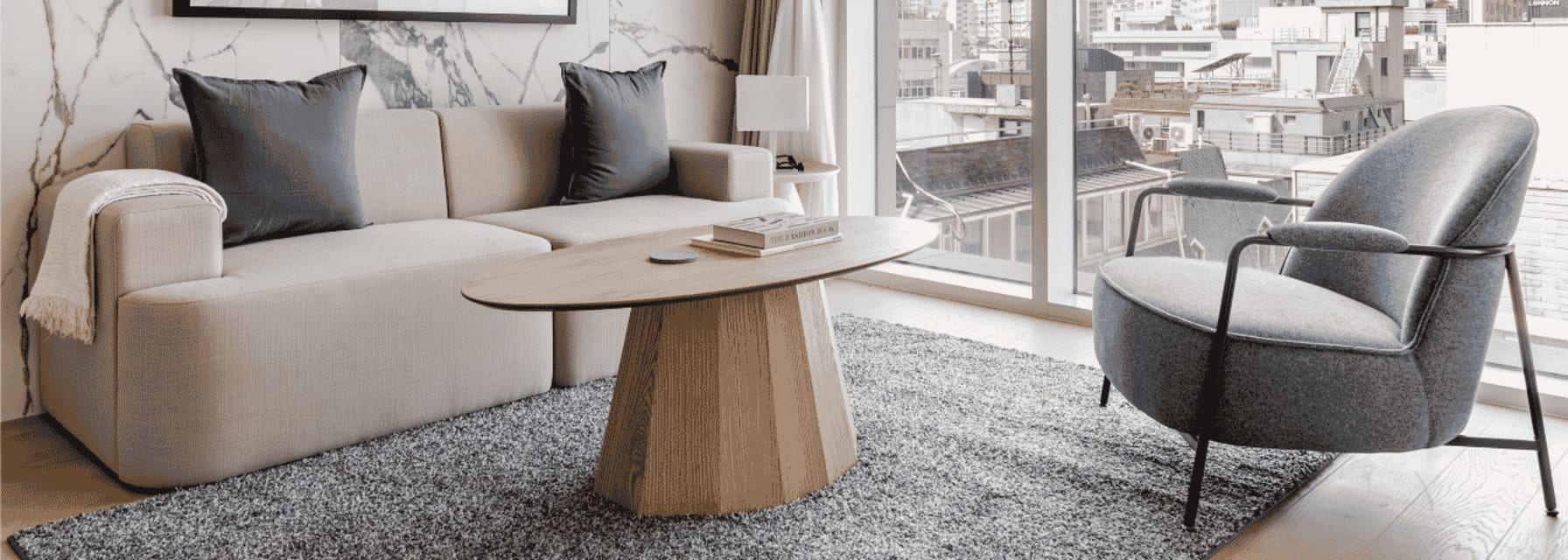


Renting for a month or longer in Seoul creates a different set of decisions from booking a short hotel stay or committing to a conventional residential lease. The right option depends not only on price, but also on how long you will stay, whether the home is furnished, what is included, where you need to commute, and how certain your departure date is.
This guide explains how to compare monthly apartment rentals in Seoul for stays ranging from one month to a year.
Key takeaways
- “Monthly apartment rental” can describe several housing models in Seoul, so check the actual contract and booking structure rather than relying on the label alone.
- For a one-month stay, move-in readiness and minimal setup are usually particularly important.
- At three to six months, kitchen, laundry, workspace, location, total cost, and flexibility become increasingly relevant.
- For six to twelve months, compare furnished monthly housing with longer-term rental alternatives based on the complete financial and practical commitment.
- Always verify the specific unit, inclusions, deposit, fees and change conditions before booking.
What does “monthly apartment rental” mean in Seoul?
“Monthly apartment rental” is useful search language, but it does not refer to one standard type of contract or property in Seoul.
Depending on the provider and length of stay, a search for monthly housing may return professionally managed furnished apartments, serviced apartments, furnished studios or officetels, co-living spaces, and conventional Korean residential rentals.
Traditional Korean wolse — written “weolse” in some English-language government guidance — has a more specific meaning. Seoul Metropolitan Government describes it as a residential rental structure involving a deposit and monthly rent, generally associated with a one- to two-year rental contract.
Serviced apartments are another distinct option. Seoul Metropolitan Government describes them as furnished units for short- and long-term visitors that generally combine residential facilities, including a kitchen, with hotel-like services such as a front desk and common facilities.
A professionally managed furnished monthly apartment can use a different booking structure again, so renters should compare the actual terms rather than assuming that every monthly option works like traditional wolse.
| Rental type | Typical setup | What to check carefully | Useful for |
| Furnished monthly apartment | Private furnished home | Minimum stay, inclusions, deposit, flexibility | Temporary residential living |
| Serviced apartment | Furnished unit with hospitality-style services | Housekeeping, services, pricing | Extended stays where regular service matters |
| Furnished studio or officetel | Compact self-contained unit | Furnishings, building rules, lease structure | Solo renters and smaller households |
| Co-living | Private room or studio plus shared facilities | Privacy, shared areas, contract terms | Renters comfortable with communal living |
| Traditional wolse | Deposit plus monthly rent | Deposit, lease period, documentation | Longer conventional residential arrangements |
These are broad categories. Individual properties and agreements can differ considerably.
Which monthly rental works for a 1-12 month stay?
The most useful way to approach Seoul monthly rentals is to start with the length of time you realistically expect to stay.
A person coming for five weeks has different priorities from someone relocating for ten months.
Staying in Seoul for around one month
For a stay of roughly one month, setup time matters.
Buying furniture, arranging household items and organising utilities can be impractical when you will leave only a few weeks later. A furnished, move-in-ready option may therefore be worth considering.
Before booking, check:
- Whether the property accepts a one-month stay
- Exact move-in and move-out dates
- Furniture and appliances included
- Kitchen setup
- Wi-Fi and utilities
- Laundry facilities
- Upfront payments
- Check-in and move-out procedures
Do not assume that every property advertised as a monthly rental accepts a single-month booking.
Blueground’s furnished apartments in Seoul typically have a minimum stay of one month, making them an option for renters who need a home beyond a short hotel stay but are not ready to commit to a conventional longer-term lease.
Staying for two to three months
Once a stay reaches several months, the apartment has to function more like a home.
A kitchen, usable workspace, laundry facilities and storage can become more relevant, particularly for someone working in Seoul rather than visiting primarily for leisure.
At this stage, compare:
- Full cost for the entire period
- Kitchen and laundry arrangements
- Workspace
- Apartment size and layout
- Commute to work or study
- Utilities and Wi-Fi
- Cleaning arrangements
- Extension options
For a three-month stay, comparing the headline rate alone can also be misleading. A hotel, serviced apartment, and furnished monthly apartment may include different services and require different upfront payments, so compare the complete commitment rather than only the headline rate.
Staying for three to six months
Three- to six-month rentals are particularly relevant to work assignments, research visits, temporary projects, and relocation periods.
For this duration, everyday functionality usually deserves as much attention as the booking process.
Consider whether the home provides:
- Enough storage for several months
- A practical work area
- Kitchen facilities you will actually use
- Convenient laundry access
- Reliable internet
- Appropriate heating and cooling
- A manageable commute
- Maintenance or customer support
Flexibility can also become more important. If a three-month assignment may turn into four months — or finish earlier than planned — understand the applicable extension and early-departure conditions before booking.
Do not assume that “monthly” means the agreement can automatically be ended at the end of any month.
Staying for six to twelve months
For a six- to twelve-month stay, the decision becomes broader.
A furnished monthly apartment may reduce the setup required at the beginning and end of the rental, while a conventional longer-term home may offer a different price, deposit, and contract structure.
Compare the complete commitment for each option, including:
- Rental payments
- Security deposit
- Furniture
- Utilities
- Internet
- Kitchen equipment
- Bedding and household items
- Moving costs
- Cleaning
- Contract duration
- Extension or termination conditions
- Time required to set up and later vacate the home
The right answer depends on the renter’s circumstances. Someone arriving for a fixed ten-month assignment may evaluate the options differently from someone whose relocation could become permanent after six months.

Comparing different apartment stay lengths in Seoul
The longer you stay, the less useful it becomes to judge an apartment only by how easy it is to move into.
| Factor | 1 month | 3 months | 6 months | 12 months |
| Move-in convenience | Very important | Important | Important | Compare with alternatives |
| Furnishings | Important for most temporary renters | Important | Important | Compare setup cost |
| Kitchen and laundry | Useful | Increasingly important | Important | Important |
| Workspace | Depends on purpose | Important for professionals | Important | Important |
| Commute | Important | Very important | Very important | Very important |
| Total cost | Compare full stay | Major consideration | Major consideration | Critical |
| Upfront cash | Check carefully | Important | Important | Compare rental models |
| Flexibility | Useful | Important | Important if dates are uncertain | Contract-dependent |
| Extension planning | Limited for fixed stays | Useful | Often relevant | Depends on longer-term plans |
This table is a decision framework, not a rule. A traveller who eats out every day may care less about a kitchen, while a one-month remote worker may consider a proper workspace essential.
Should you choose a furnished or unfurnished apartment?
For a temporary stay, the distinction between furnished and unfurnished housing affects more than whether a sofa is provided.
With an unfurnished rental, you may need to arrange some combination of:
- Bed and furniture
- Kitchen equipment
- Bedding
- Internet
- Utility arrangements
- Household items
- Moving or delivery
- Disposal or resale when leaving
These tasks can make sense for a long conventional tenancy but may create unnecessary work for someone staying only a few months.
A furnished rental reduces some of that setup, but “furnished” does not automatically mean fully move-in-ready.
Before booking, confirm the exact inventory for the selected unit. Check whether items such as cookware, bedding, laundry equipment, Wi-Fi, or workspace are actually provided instead of assuming that they are included in every furnished property.
How much does a monthly apartment in Seoul cost?
There is no single useful monthly price for an apartment in Seoul.
The amount you pay can vary according to:
- Neighbourhood
- Building
- Apartment size
- Number of bedrooms
- Furnishing level
- Length of stay
- Requested dates
- Services
- Utilities
- Security deposit
- Additional fees
For this reason, compare total cost for your actual dates, rather than relying on a broad Seoul average.
It is also helpful to separate two numbers:
Total housing cost
This can include recurring and non-refundable charges such as rent, mandatory fees, utilities not included in rent, cleaning, or other required services.
Upfront cash required
This may include the initial rental payment plus a refundable security deposit or other amounts due before move-in.
A refundable deposit affects the amount of money needed at the beginning of the stay but should not automatically be treated as an expense if it is returned according to the agreement.
Before comparing properties, request a breakdown showing which charges are:
- Recurring
- One-time
- Refundable
- Optional
This is more useful than comparing advertised monthly rent alone.

What should be included in a furnished monthly rental?
There is no universal furnishing standard across Seoul providers.
For a stay of one month or longer, verify the features that will affect everyday living rather than relying on a general description such as “fully furnished”.
Check the selected apartment for:
- Bed and essential furniture
- Seating and dining space
- Kitchen appliances
- Cookware and tableware
- Refrigerator
- Laundry facilities
- Wi-Fi
- Heating and cooling
- Bedding and linens
- Storage
- Workspace
- Cleaning arrangements
- Maintenance support
Building facilities may also matter, but these can vary even between apartments operated by the same provider.
Treat the individual listing and booking documentation as the source of truth.
What should you know about deposits, fees, and documents?
Payment and documentation requirements can differ substantially depending on the rental model.
A traditional Seoul rental, a furnished monthly apartment and a serviced residence should not be assumed to have the same deposit or contract requirements.
Seoul Metropolitan Government’s guidance on conventional wolse describes a deposit alongside monthly rent and notes that the deposit is generally returned at the end of the contract, subject to matters such as unpaid rent or utilities.
A professionally managed furnished rental may follow a different structure.
Before committing, confirm:
- Security deposit, if required
- Deposit refund conditions
- Monthly or total rental payment
- Mandatory charges
- Payment schedule
- Accepted payment method
- Identification requirements
- Contracting party
- Guarantor requirement, if any
- Rules for additional occupants
- Any company invoicing requirements
Foreign residents who need to use an address for immigration or administrative procedures should also verify whether the specific property and contract meet their requirements before paying. Do not assume that eligibility applies to every monthly rental.
How is the deposit protected?
As set out above, most Korean residential leases involve a deposit. The steps that actually protect it are separate from the contract itself and have to be completed after move-in.
Resident registration and the fixed date stamp
Korean nationals must file a resident registration move-in report within 14 days of moving in. Possession of the home together with that registration establishes statutory tenant standing from the following day, and a fixed date stamp on the contract adds priority repayment rights. Foreign nationals must report a change of residence after completing alien registration. These two steps are effectively the only protection available, regardless of how small the deposit is.
Lease reporting
Residential leases above the statutory deposit or monthly rent thresholds must be reported within 30 days of signing in the Seoul metropolitan area and other designated regions. The grace period ended on 31 May 2025, so contracts signed from 1 June 2025 onward are subject to penalties for non-reporting. Submitting the contract at the same time also secures the fixed date stamp.
A sublease structure caps how long you can extend
Many furnished monthly homes are operated on a sublease basis, where the operator leases from the owner and re-lets to the occupant. Where that applies, extension depends on the remaining term of the head lease rather than only on availability. Confirm the head landlord’s consent, the remaining term, and how occupants are protected if the head lease ends early.
Residence-hotel properties, some officetels and sublease arrangements may restrict resident registration depending on building policy or contract structure. Because registration is what protects the deposit, this should be confirmed before signing.
This section describes general Korean leasing and tax practice. It is not legal or tax advice. Confirm the treatment of a specific arrangement with a Korean adviser.
Can foreigners rent a monthly apartment before arriving in Seoul?
Some monthly housing providers allow international renters to select and arrange a home remotely, but the process varies.
When booking before arrival, the main challenge is verifying exactly what you will receive without inspecting the apartment in person.
Before paying, ask for:
- Exact unit details
- Current photographs or floor plan
- Confirmed availability for your dates
- Complete price breakdown
- Furnishing and appliance information
- Required documents
- Payment instructions
- Contract or booking conditions
- Move-in procedure
- Support contact
Blueground allows international renters to browse furnished apartments in Seoul and check availability and pricing for selected homes and dates before arrival.
Being able to book a home remotely is separate from questions such as residence or address registration. If those administrative requirements apply to your relocation, confirm them for the selected unit before completing the booking.
Read more: Corporate lease vs individual lease for employee relocation in Seoul
How flexible are monthly apartment rentals in Seoul?
The word “monthly” does not by itself tell you how flexible a rental will be.
Before booking, check five separate issues:
- Minimum stay: What is the shortest permitted booking?
- Cancellation: What happens if you cancel before moving in?
- Early departure: What happens if you need to leave before the confirmed end date?
- Extension: Can you request additional months?
- Availability and pricing: Will the same apartment and rate remain available?
These issues become particularly important when a work assignment, academic programme or relocation does not have a predictable end date.
Ask for the applicable conditions in writing. An option to request an extension is not necessarily a guarantee that the same apartment will remain available.
Where should you rent a monthly apartment in Seoul?
For a multi-month stay, start with the places you need to reach regularly rather than choosing a neighbourhood only because it is popular with international visitors.
A useful process is:
- Identify your office, university or main weekday destination.
- Decide on a realistic maximum commute.
- Identify the subway lines and stations that make that commute practical.
- Compare monthly rentals within those areas.
- Check supermarkets, pharmacies, gyms, cafés and other services you expect to use regularly.
- Compare the apartment itself against the location premium.
For example, someone working in the Gangnam business area may prioritise a different set of neighbourhoods from someone commuting to Yeouido or central Seoul.
Blueground’s current Seoul inventory spans several districts, including Gangnam, Jongno, Jung, Mapo, Seocho, Yeongdeungpo and Yongsan, although individual unit availability changes according to the requested dates.
The goal is not necessarily to find the most famous neighbourhood. It is to find a location where the commute, rental options and everyday routine work for the full stay.

Studio or one-bedroom: which layout is better for a monthly stay?
Length of stay alone does not determine the right apartment size.
A studio may be sufficient for a solo renter who spends most working hours outside the home. Someone working remotely, relocating as a couple or expecting frequent visitors may value the separation between sleeping and living areas in a one-bedroom apartment.
Compare:
- Number of occupants
- Floor area
- Workspace
- Storage
- Kitchen layout
- Privacy
- Length of stay
- Monthly cost
- Building amenities
Check the actual floor plan and measurements rather than assuming that every studio or one-bedroom follows the same layout.
Blueground’s current Seoul inventory includes studios as well as one- and two-bedroom homes, with availability depending on dates and location.
Monthly apartment rental checklist before booking
Before confirming a monthly apartment in Seoul, review four areas.
Stay and contract
- Exact move-in date
- Exact move-out date
- Minimum stay
- Cancellation conditions
- Early-departure conditions
- Extension process
- Required notice
Apartment and everyday living
- Furniture
- Kitchen
- Kitchenware
- Wi-Fi
- Utilities
- Laundry
- Bedding
- Workspace
- Heating and cooling
- Storage
- Cleaning
- Maintenance support
Cost
- Rent or complete housing price
- Utilities
- Security deposit
- Mandatory fees
- Optional services
- Parking
- Refundable amounts
- Payment schedule
Location and administration
- Nearest useful subway station
- Realistic commute
- Everyday services
- Required identification
- Contracting party
- Payment method
- Company invoicing requirements where applicable
- Address-registration requirements where relevant
Get the important conditions for the specific apartment, dates and booking structure in writing before making the final decision.
Finding a professionally managed monthly apartment in Seoul
Professionally managed furnished apartments are one option for people who want a private home for one month or longer without setting up an unfurnished property from scratch.
When evaluating a provider, look beyond photographs and consider whether it offers:
- Confirmed availability
- Clear unit information
- Transparent pricing for the selected dates
- Furnished residential space
- A documented booking process
- Maintenance support
- Clear payment and contract terms
Blueground offers furnished apartments in several Seoul districts, with studio, one-bedroom, and two-bedroom options depending on the location and dates selected. Stays typically start from one month, and availability and pricing can be checked for individual homes.
During a Blueground stay, the app provides access to customer support and can be used for requests such as cleaning or maintenance where applicable. As with any provider, check the individual listing and booking terms, as apartment size, layout, facilities, pricing, and availability can vary by home.
For a one-month stay, the priority may simply be arriving to a functioning furnished home. For a six- or twelve-month stay, location, cost, residential functionality and contract conditions become increasingly important. Matching the rental model to the actual duration and purpose of the stay is therefore a better starting point than looking for one type of apartment that works for everyone.
Read more: How to arrange corporate housing in Seoul for an employee relocation
Frequently asked questions
Can I rent an apartment in Seoul for only one month?
Yes, one-month furnished rental options exist in Seoul, although minimum stays vary by provider and property. Blueground’s furnished apartments in Seoul typically have a minimum stay of one month.
What is the difference between a monthly rental and wolse in Seoul?
“Monthly rental” is a broad English-language term that can describe several temporary or medium-term housing models. Traditional Korean wolse is more specific: Seoul Metropolitan Government describes it as a rental structure involving a deposit plus monthly rent, generally based on a one- to two-year rental contract.
Are monthly apartments in Seoul usually furnished?
Many properties marketed specifically for temporary or medium-term stays are furnished, but furnishing is not inherent to every apartment rented on a monthly payment basis. Check the exact listing for furniture, kitchen equipment, bedding, laundry and other inclusions.
Can I extend a monthly apartment rental in Seoul?
It depends on the provider, the agreement, and whether the apartment remains available for the additional dates. Confirm the extension process, required notice, new pricing and continued availability before relying on an extension.

Related Stories


