


The best areas to stay near Seoul City Hall for business trips and extended stays
Seoul City Hall can be a practical base for a business trip or extended assignment, but the best area depends on where you need to work each day. A…

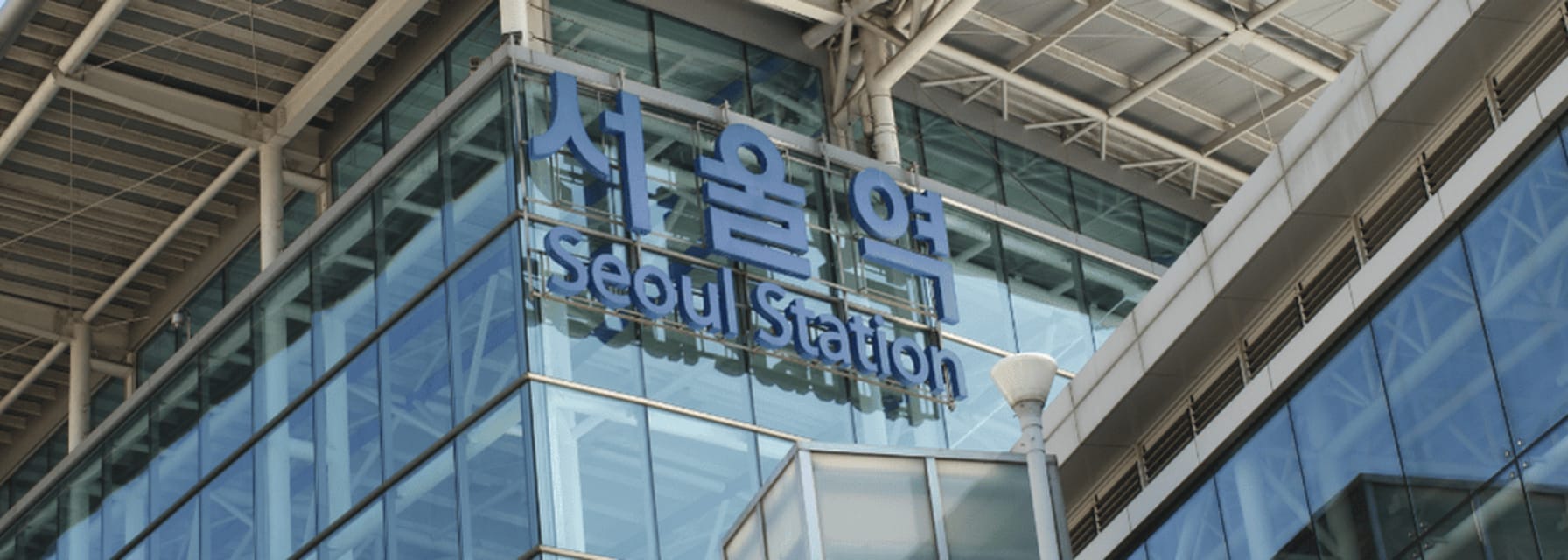


Seoul City Hall can be a practical base for a business trip or extended assignment, but the best area depends on where you need to work each day.
A professional with regular meetings around City Hall or Jongno may prioritize a short commute, while someone travelling frequently through Incheon Airport or to other Korean cities may benefit more from staying closer to Seoul Station. For a one-month or longer stay, everyday factors such as grocery access, laundry, workspace, and transport connections also become more important.
This guide uses Seoul City Hall at 110 Sejong-daero, Jung-gu as the reference point and compares nearby central areas that are walkable or within a short public-transport journey. City Hall Station serves Subway Lines 1 and 2, with Exit 5 listed by the Seoul Metropolitan Government for the main City Hall building.
Key takeaways
- City Hall, Seosomun, and Sogong-dong are the most practical choices when regular work or meetings are centered around Seoul City Hall, as many locations can be reached on foot.
- Gwanghwamun and Jongno work particularly well for professionals with frequent meetings around central government offices and the Jongno business district.
- Myeongdong offers strong everyday convenience, with extensive dining, shopping, and services, but the busiest streets may be less suitable for employees who prefer quieter surroundings during a longer stay.
- Seoul Station and Namdaemun are worth considering for travellers who frequently use airport rail or intercity rail services while still needing convenient access to City Hall.
- The most popular tourist area is not automatically the best extended-stay base. For stays of a month or longer, commute frequency, unit facilities, groceries, laundry, and everyday services should carry more weight than sightseeing access.
Best areas near Seoul City Hall at a glance
The areas around Seoul City Hall suit different business routines. Staying directly around City Hall minimises the daily commute, while Gwanghwamun works better for meetings farther north and Seoul Station is more practical for frequent airport or intercity travel.
| Area | Best for | Access to Seoul City Hall | Key subway stations | Business-trip advantage | Extended-stay advantage | Main trade-off |
| City Hall, Seosomun & Sogong-dong | City Hall and central Jung-gu work | Mostly walkable | City Hall, Lines 1 & 2 | Minimal commuting for central meetings | Central services and furnished rentals in Jung-gu | More business-oriented than residential |
| Gwanghwamun & Jongno | Government and Jongno meetings | About 10 min walk from Gwanghwamun Station | Gwanghwamun Line 5; Jonggak Line 1 | Strong access to government and central office clusters | Good dining and daily services | Less convenient if most work is south of the river |
| Myeongdong | First-time international business travellers | About 10–15 min from northern Myeongdong; around 15 min from Myeongdong Station | Myeongdong Line 4; Euljiro 1-ga Line 2 | Easy access to several central districts | Extensive dining, shopping and everyday services | Busy streets can mean more noise and foot traffic |
| Euljiro | Meetings spread across central Seoul | Euljiro 1-ga is about 6–7 min on foot | Euljiro 1-ga Line 2; Euljiro 3-ga Lines 2 & 3 | Strong east-west subway connectivity | Dining and furnished rental options | Conditions vary considerably between western and eastern Euljiro |
| Seoul Station & Namdaemun | Airport and intercity travel | About 10 min from Namdaemun or 16 min from Seoul Station on foot | Seoul Station Lines 1 & 4, AREX | Direct rail connections beyond central Seoul | Useful for employees travelling frequently | Less convenient than City Hall for a daily City Hall commute |
City Hall Station serves Lines 1 and 2, while official Seoul information places Euljiro 1-ga within a few minutes’ walk of the City Hall complex. Current route data puts Gwanghwamun at roughly 800 m and Seoul Station at around 1.3 km from City Hall Station.
City Hall, Seosomun, and Sogong-dong: best for walk-to-office convenience
If work is concentrated around Seoul City Hall or central Jung-gu, this is the area to shortlist first.
- Best for: Daily City Hall and central Jung-gu meetings
- City Hall access: Mostly walkable
- Key station: City Hall Station, Lines 1 and 2
- Extended-stay strength: Short commute with central services close by
- Main trade-off: Predominantly commercial surroundings
City Hall, Seosomun, and Sogong-dong place employees within walking distance of Seoul Metropolitan Government offices and many workplaces around Sejong-daero. Seoul City Hall’s main building is served by City Hall Station Exit 5, while its Seosomun offices use Line 1 exits and Lines 2 exits 11 and 12, making the exact side of the station worth checking before choosing a unit.
The area also works well for longer assignments because Myeongdong, Namdaemun, and Euljiro are close enough for groceries, restaurants, and other daily needs without requiring a long journey after work. Furnished monthly rentals are available in the wider Jung District; Blueground has furnished apartments in Jung-gu, including central locations such as Uijuro 1-ga, although availability depends on the requested dates.
Choose this area if: reducing a repeated weekday commute is your main priority.
Consider another area if: your meetings are mostly in another business district or you want a more residential environment outside office hours.
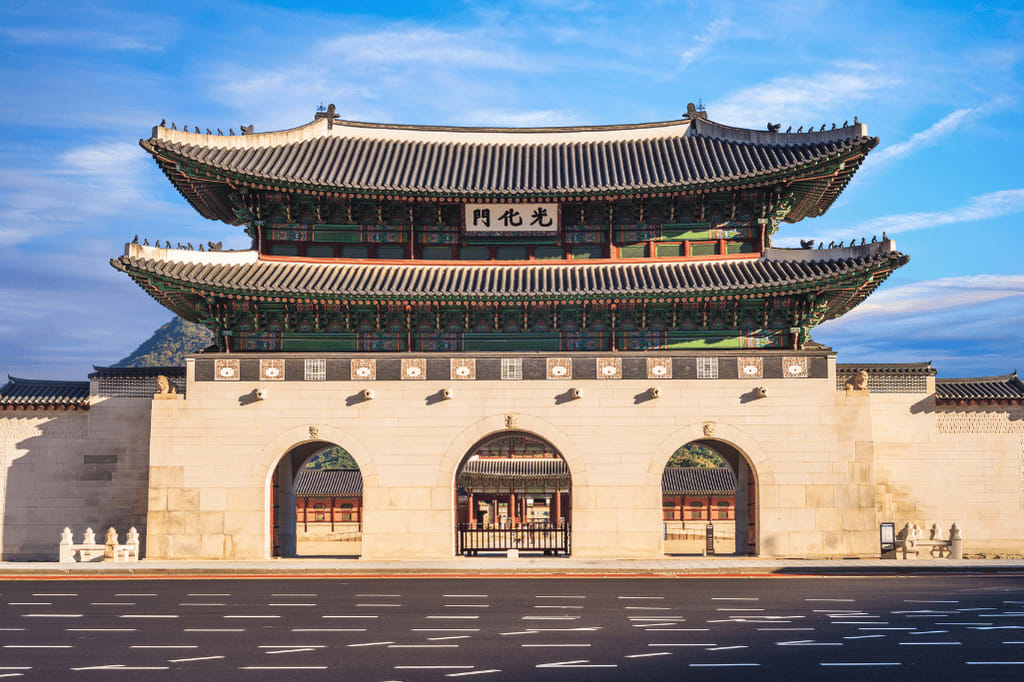
Gwanghwamun and Jongno: best for central meetings and government-sector access
Gwanghwamun and central Jongno are particularly practical when work takes place north of City Hall around government offices and major business buildings.
- Best for: Government, professional-services, and central Jongno meetings
- City Hall access: Around 9–10 minutes on foot from Gwanghwamun Station
- Key station: Gwanghwamun Station, Line 5; Jonggak Station, Line 1
- Extended-stay strength: Central location with dining and everyday services
- Main trade-off: Less direct than City Hall for meetings elsewhere in Jung-gu
Gwanghwamun Station sits on Line 5, while City Hall Station is roughly 800 metres away on foot. The two areas are close enough that walking may be simpler than taking the subway, which requires a transfer between Lines 5 and 2. Some Seoul Metropolitan Government offices between City Hall and Gwanghwamun are officially listed as accessible from either station.
This location suits assignments involving government agencies, corporate offices, and professional-services firms concentrated along Sejong-daero and Jongno. It also offers a broad range of cafés and restaurants for weekday routines without relying on Myeongdong’s busiest commercial streets.
Furnished rentals are available across Jongno District, although availability close to Gwanghwamun itself should be checked for the employee’s exact dates rather than inferred from district-wide supply.
Choose this area if: most meetings are around Gwanghwamun, Jongno, or northern central Seoul.
Consider another area if: airport travel or a City Hall doorstep commute is the stronger priority.
Myeongdong: best for first-time international business travellers who prioritise convenience
Myeongdong is a practical option for international professionals who want everyday services within easy reach while remaining close to Seoul’s central business areas.
- Best for: First-time international business travellers
- City Hall access: Approximately 15 minutes on foot from Myeongdong Station; shorter from the northern edge
- Key stations: Myeongdong Station, Line 4; Euljiro 1-ga Station, Line 2
- Extended-stay strength: Extensive dining, shopping, and daily services
- Main trade-off: Crowds and evening activity in the busiest streets
Myeongdong covers a wider area than its main shopping streets. From Myeongdong Station, Seoul City Hall is roughly a 1.3 km or 15-minute walk, while properties closer to Euljiro 1-ga can significantly shorten that journey. The northern side also gives direct access to Line 2, which can be more useful for a daily business commute than Line 4 alone.
The district is particularly easy for a new arrival because restaurants, convenience stores, retail, and other everyday services operate across a compact area.
The trade-off is location within the neighbourhood. A residence beside a busy shopping street can feel very different from one near Euljiro 1-ga or Sogong-dong, especially after work and on weekends.
Choose this area if: convenience and easy daily routines matter as much as office access.
Consider another area if: a quiet residential environment or the shortest possible City Hall commute is more important.
Euljiro: best for central connectivity and after-work dining
Euljiro works well for professionals whose meetings are spread across central Seoul rather than concentrated at one office.
- Best for: Multiple central-Seoul work locations
- City Hall access: About 6–7 minutes on foot from Euljiro 1-ga
- Key stations: Euljiro 1-ga Line 2; Euljiro 3-ga Lines 2 and 3
- Extended-stay strength: Central transport, dining, and furnished rental options
- Main trade-off: Different sections of Euljiro offer very different commutes
Euljiro 1-ga is immediately east of City Hall. Current route data places the two stations around 590 metres apart, and Seoul Metropolitan Government lists part of the City Hall complex as only a three-minute walk from Euljiro 1-ga Exit 1-1.
That proximity makes western Euljiro particularly useful for employees who need both City Hall access and Line 2 connections across Seoul. Farther east, Euljiro 3-ga adds Line 3, but the daily walk back to City Hall becomes longer. For this reason, the specific station should matter more than an address simply being marketed as “Euljiro.”
Restaurants and cafés are plentiful around the commercial corridors, and furnished rentals are available in the wider area. Blueground has furnished apartments in Euljiro 5-ga, although these should not be treated as equivalent to Euljiro 1-ga for a City Hall commute. Availability also depends on the requested dates.
Choose this area if: you need Line 2 frequently and your meetings are spread across central Seoul.
Consider another area if: you need to walk to City Hall every day and the available unit is in eastern Euljiro.
Explore more: Corporate lease vs individual lease for employee relocation in Seoul
Seoul Station and Namdaemun: best for frequent airport or intercity travel
Seoul Station and Namdaemun become stronger choices when airport transfers or frequent rail trips are part of the work schedule.
- Best for: Frequent airport, KTX, and intercity rail travel
- City Hall access: Around 10 minutes from Namdaemun; about 16 minutes on foot from Seoul Station
- Key station: Seoul Station, Lines 1 and 4, Gyeongui-Jungang Line and AREX
- Extended-stay strength: Direct access to major transport services
- Main trade-off: Farther from City Hall than the closest Jung-gu options
Seoul Station is one Line 1 stop from City Hall, with the train journey itself taking only a few minutes. Walking between the stations is approximately 1.3 km, while Namdaemun is closer to City Hall at roughly a 10-minute walk.
The main advantage is travel beyond central Seoul. The AREX Express connects Seoul Station with Incheon Airport Terminal 1 in about 43 minutes and Terminal 2 in about 51 minutes. Seoul Station is also a major KTX hub and the starting point for the Gyeongbu and Gangneung lines.
For an extended assignment, the most practical location may therefore be between Seoul Station, Namdaemun, and City Hall rather than directly beside the station. Blueground has furnished apartments in Dongja-dong near Seoul Station and in central Jung-gu, with availability varying by location and dates.
Choose this area if: airport or KTX trips occur regularly during the assignment.
Consider another area if: airport travel happens only at arrival and departure while City Hall is the daily workplace.

What should you check before booking a 30+ day stay near Seoul City Hall?
Lease, payment, and administrative requirements
Before confirming a rental, check:
- Minimum rental period and required security deposit
- Contracting party and whether the employer can book or pay on the employee’s behalf
- Payment schedule, accepted payment methods and invoicing requirements
- Cancellation, early-termination, and extension terms
- Rules for additional occupants, pets, and parking
- Whether the address can be used for any required immigration or administrative procedures
These conditions can differ by housing provider and unit, so they should be confirmed in the actual agreement rather than assumed from general Seoul rental practices.
Korea-specific administrative procedures
The last item above deserves more detail. In Korea a registered address is not simply a postal address — it connects to both deposit protection and immigration compliance.
- Resident registration — Korean nationals must file a move-in report within 14 days. Possession of the home together with that registration establishes statutory tenant standing from the following day, and a fixed date stamp on the contract adds priority repayment rights.
- Residence reporting for foreign nationals — a change of residence must be reported after alien registration is complete. Proof of alien registration is often a prerequisite for opening a bank account or taking out a mobile contract.
- Lease reporting — leases above the statutory deposit or monthly rent thresholds must be reported within 30 days of signing. The grace period ended on 31 May 2025, so contracts signed from 1 June 2025 onward are subject to penalties for non-reporting.
Jung-gu warrants particular attention. The City Hall, Myeongdong, and Euljiro areas are business districts with a high share of officetels and residence-hotel properties, and those types may restrict registration depending on building policy or contract structure. Where the home is operated on a sublease, the head landlord’s consent is the deciding factor.
If the assignment requires the address for an immigration procedure or for documents submitted to an employer, confirm in writing before signing that registration is possible at that address. It is difficult to reverse after move-in.
This section describes general Korean leasing and tax practice. It is not legal or tax advice. Confirm the treatment of a specific arrangement with a Korean adviser.
In-unit requirements for working and living
For a 30+ day assignment, confirm what is included rather than relying on a description such as “fully furnished.” Check for a usable workspace, reliable Wi-Fi, kitchen equipment, washing machine, or laundry access, storage, heating, and air conditioning, bedding, cleaning arrangements, and maintenance support.
Building and everyday-living requirements
Review the immediate surroundings as carefully as the unit itself. Check the actual walking route to the employee’s useful subway entrance, along with nearby supermarkets, pharmacies, gyms, cafés, and weekday dining. Building access, lifts, waste disposal, and evening noise can also affect daily convenience during a longer stay.

Finding a furnished monthly rental near Seoul City Hall
Professionally managed furnished rentals can suit employees who need more everyday functionality than a typical short hotel stay. A kitchen, laundry facilities, workspace, and predictable move-in setup become particularly useful when the assignment lasts one month or longer.
Blueground currently offers furnished rentals across Seoul, including inventory in Jung District. Current listings include units in Uijuro 1-ga as well as other parts of Jung-gu, while availability changes according to the requested dates. Blueground’s furnished apartments in Seoul typically have a minimum stay of one month. Company-arranged stays may also be possible, depending on the booking structure and applicable terms.
Before booking, check the specific listing for unit size, washing machine, workspace, building amenities, and the actual route to City Hall. The booking details should also be reviewed for the security deposit, utilities, payment schedule, cancellation conditions, and extension options rather than assuming the same terms apply to every unit.
Travellers can compare current furnished apartments in Seoul and Jung District rentals, while HR and mobility teams arranging employee housing can review Blueground’s corporate housing in Seoul.
- Furnished apartments in Seoul
- Furnished rentals in Jung District
- Corporate housing in Seoul
For company-arranged stays, Blueground for Business provides a route for reviewing housing and booking options before an employee moves to Seoul. The applicable contracting and payment arrangements should still be confirmed for the specific booking.
Frequently asked questions
Is Seoul City Hall a good area to stay for a business trip?
Yes, particularly when meetings are concentrated around City Hall, central Jung-gu, Gwanghwamun, or Jongno. City Hall Station serves Subway Lines 1 and 2, making it useful for both walking to nearby offices and connecting to other parts of Seoul; another district may be more practical if most work takes place in Gangnam, Yeouido, or another business hub.
Is City Hall or Myeongdong better for a business stay in Seoul?
Choose City Hall when a short commute to central offices is the main priority. Choose Myeongdong when you prefer dense access to restaurants, shops, and everyday services, but check the exact location because properties around the busiest commercial streets can have more evening foot traffic than those closer to City Hall or Euljiro 1-ga.
Where should you stay in Seoul for a one-month business trip?
Start with the employee’s main workplace rather than Seoul’s most popular visitor districts. Around City Hall, areas such as City Hall itself, Gwanghwamun, Myeongdong, Euljiro, and the Seoul Station corridor offer different balances of commute time, transport, and everyday convenience, while a one-month stay also makes a kitchen, laundry, workspace, and flexible rental terms more important.
How close should you stay to a subway station in Seoul?
There is no single ideal walking distance because the useful entrance may depend on the subway line, transfer route, and direction of the employee’s daily commute. Check the walking route from the building entrance to the specific station exit you will regularly use, especially if carrying luggage or if lift and escalator access matters; Seoul Metropolitan Government publishes accessibility information for stations including City Hall and Seoul Station.

Related Stories


